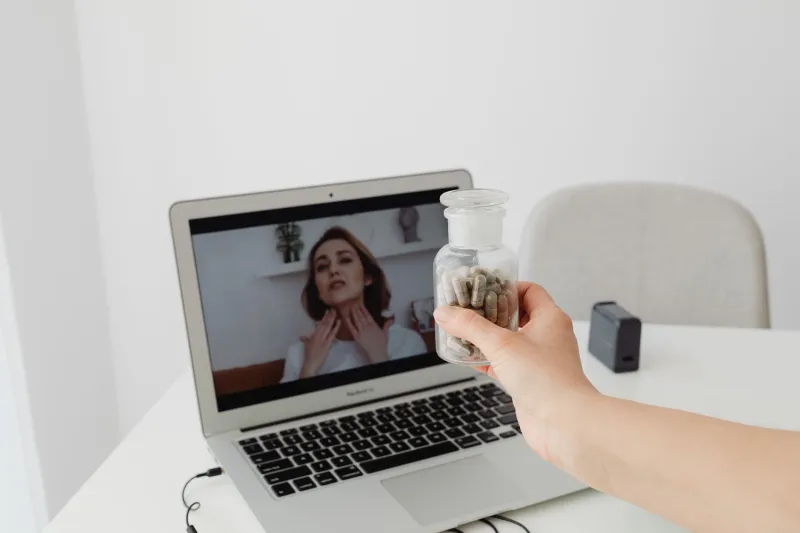
The Considerate Cupboard: CBD Etiquette for Shared Houses
Photo: Infrogmation of New Orleans, CC BY-SA 4.0, via Wikimedia Commons
Living with other people is mostly a series of small negotiations. Who bought the milk. Whose turn it is to descale the kettle. Whether the radiator in the spare room counts as a personality flaw. Adding CBD into that mix doesn't have to be dramatic, but it does ask for a bit more thought than shoving a dropper bottle behind the teabags and hoping for the best.
This isn't about convincing anyone of anything. It's about being a decent person to share a kitchen with — and keeping your products in a state you'd actually want to use.
Start from the simple fact: it's their home too
If you've ever had a flatmate whose protein powder colonised an entire shelf, you'll get the principle. CBD oils, balms and hemp hearts are no different. They need a home, but that home has to be negotiated rather than annexed.
A useful question to ask yourself: if someone else brought this into the house without mentioning it, how would you feel? Most people land somewhere between 'fine, as long as it's labelled' and 'I'd rather have been told'. Neither is unreasonable. The trouble usually starts when nobody says anything at all.
Label it like you mean it
A CBD bottle without a name on it is just a mystery. In a shared fridge, that's a genuine problem. The same goes for a tub of hemp hearts decanted into an unmarked jar, or a balm that looks suspiciously like someone's expensive night cream.
Keep the original packaging where you can — it'll have the batch number, best-before date and dosage information on it, which matters if you ever need to check something. If you do decant anything, add a label with your name and the date. A strip of masking tape and a biro is unglamorous and completely sufficient.
A few habits that make shared storage easier:
- Keep oils in their original dark bottles, away from the hob and direct sunlight.
- Use a small labelled box or caddy if you'd rather not spread out.
- Don't store anything in food containers that could be mistaken for actual food.
- If you keep a balm in a shared bathroom, mention it — especially if someone might mistake it for hand cream.
It sounds fussy written down. In practice it takes about four minutes and saves a lot of awkward hovering.
The high shelf is not always high enough
If there are children in the house — yours, your flatmate's, a visiting niece who treats the kitchen like an adventure playground — storage needs to be genuinely out of reach, not just vaguely up. A high shelf is not the same as a locked cupboard, and a cupboard with a dodgy catch is not the same as a locked cupboard either.
CBD products should be kept away from children, full stop. Oils often come in small bottles with droppers that look, to a curious four-year-old, exactly like something worth investigating. A small lockable box is cheap and does the job. If that feels like overkill, consider it the same category as keeping bleach out of reach — not because CBD is bleach, but because 'out of reach' is a sensible default for anything with a dose on the label.
Pets deserve the same consideration. Cats and dogs are enthusiastic about investigating new smells, and some CBD products contain ingredients that aren't meant for them. Keep bottles closed, keep them stored away, and if you're ever worried an animal has got into something, ring your vet rather than Googling it at 11pm.
Have the chat before the cupboard gets full
Talking to flatmates or family about CBD doesn't need to be a presentation. A sentence or two is usually enough: what you've bought, where you're keeping it, and whether they'd like it somewhere else.
Some people will shrug. Some will have questions — often the same ones you had at the start. And some will have a firm view that they'd rather it wasn't in the house at all. That last one is worth taking seriously rather than treating as an obstacle to argue past.
If someone says no, the answer isn't to hide it in your room and carry on. It's a conversation about what would make it workable: keeping it entirely in your own space, not using it in shared areas, or simply accepting that this particular household isn't the right place for it. A shared home isn't a debate club. Sometimes the considerate answer is 'fair enough'.
Keep the routine quiet, not secret
There's a difference between privacy and secrecy. You don't owe anyone a full explanation of why you use CBD, and you don't need to announce every dropper. But if you're keeping it in a shared space, a little transparency goes a long way.
A calm routine — a labelled box, a known shelf, a quick word if anything changes — tends to attract far less attention than furtive behaviour ever will. People generally don't mind what's in the cupboard. They mind being surprised by it.
And if you're the one who'd rather not have CBD in the house, you're allowed to say so. The whole point of a shared shelf is that it belongs to everyone on it.