Reading the Small Print: What UK Hemp and CBD Labels Are Actually Telling You in 2026
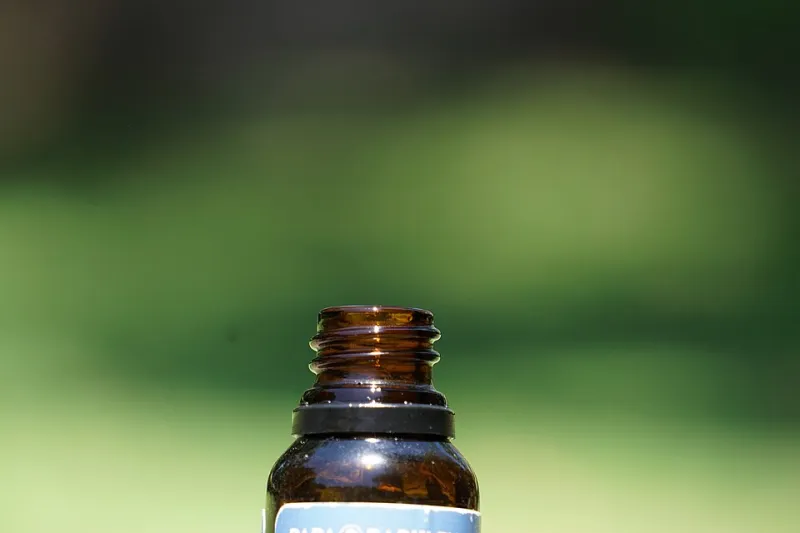
Photo: elsaolofsson, CC BY 2.0, via Wikimedia Commons
Walk into any UK health shop and you'll find shelves of small bottles with very confident front labels. Big numbers, green leaves, the word 'pure' in a serif font. Then you turn the bottle around and it's a wall of small print that could mean almost anything.
This is an attempt to decode that small print. No claims, no promises, no miracle language — just what the words mean and how to compare one product against another without getting lost.
First: the front of the pack is marketing
The front is designed to sell. The back is where the information lives. Two bottles can both say '1000mg' in enormous letters and be completely different products — different bottle size, different serving size, different concentration, different price per milligram.
Before anything else, find three numbers: total CBD in the bottle, bottle volume in millilitres, and the suggested serving. Everything else is commentary.
'Hemp' is a plant name doing a lot of heavy lifting
Hemp and cannabis are the same species — Cannabis sativa. 'Hemp' is a legal and agricultural label, generally applied to varieties grown for fibre, seed or lower-resin flower. In the UK, industrial hemp must be grown from approved seed varieties and the plant material is subject to a THC limit of 0.2%.
Here's the bit that trips people up: a product labelled 'hemp oil' may contain no meaningful cannabinoids at all. Cold-pressed hemp seed oil — the stuff in the cooking aisle — is nutritious and perfectly nice on a salad, but it's made from seeds, which don't contain CBD in any useful quantity. It is not the same product as a CBD extract, and some labels lean on the confusion. If the bottle doesn't state a milligram figure for CBD, assume there isn't one worth counting.
Full-spectrum, broad-spectrum, isolate
These three describe what's been kept in or taken out of the extract.
Full-spectrum means the extract retains the plant's natural mix of cannabinoids — CBD, small amounts of other cannabinoids, and terpenes. In the UK it must still stay within the legal THC limits, which is why reputable full-spectrum products typically show trace amounts rather than anything meaningful.
Broad-spectrum generally means the extract has had THC removed or reduced to below detection, while other cannabinoids and terpenes are retained.
Isolate is purified CBD alone — usually a white powder or a crystal-clear oil — with everything else stripped out. It's the easiest to dose precisely and the easiest to verify, because purity can be tested simply.
The honest position: there's no reliable UK evidence that one format is better than another for everyone. Full-spectrum is often described as having an 'entourage effect', but that's a hypothesis rather than a settled finding. Some people prefer isolate because they want to avoid THC entirely, including for workplace testing reasons. That's a legitimate reason to choose it.
The THC numbers you'll see
Two figures matter in the UK:
- 0.2% — the limit for THC in industrial hemp as grown.
- 1mg per container — the longstanding UK guidance for the total THC content of a consumer CBD product. In practice, this means a compliant product has such a small amount of THC that it's effectively a trace.
If a product boasts about THC content, that's a red flag in the UK market. It isn't a selling point here; it's a compliance question.
Carrier oils: what your CBD is floating in
Very few CBD products are pure extract. Most are diluted into a carrier oil, and the carrier affects taste, absorption and shelf life.
MCT oil (from coconut or palm) is the most common. It's light, fairly tasteless and widely used. Olive oil is traditional and works fine, with a stronger flavour. Hemp seed oil is popular for branding reasons but has a short shelf life and a distinct, grassy taste that people either love or don't.
None of these will transform the product. But if you dislike the taste of one, you'll take it less consistently, and consistency matters more than formulation detail.
Batch testing and certificates of analysis
This is the single most useful thing to check, and the one most shoppers skip.
A certificate of analysis — a COA — is a lab report for a specific batch. It should show cannabinoid content (confirming the CBD figure on the label), and ideally a screen for heavy metals, pesticides, residual solvents and microbial contamination.
What to look for:
- A batch number on the COA that matches the batch number on your bottle.
- A dated report from an independent, accredited lab — not an in-house one.
- Results stated per batch, not a generic 'typical analysis' PDF sitting on the homepage since 2023.
If a brand can't produce a batch-matched COA on request, that tells you something. It might not be sinister — plenty of small brands are just disorganised — but you're the one taking the product.
The FSA public list
Since 2021, CBD products sold in England, Wales and Scotland have needed to be on the Food Standards Agency's public list of permitted products, with a route toward full novel food authorisation. The list has been the reference point for legitimacy ever since, and it's worth a quick search before buying from an unfamiliar brand.
Being on the list isn't a guarantee of quality — it's an administrative stage, not a taste test — but absence from it is a genuine reason to walk away.
Questions worth asking before you buy
- How many milligrams of CBD are in the whole bottle, and how much is in one serving?
- Is there a batch-matched lab report I can read?
- Is the product on the FSA public list?
- What's the carrier oil, and does it suit how I'll take it?
- What's the price per milligram compared with the alternative I was considering?
- What's the returns policy if I don't get on with it?
Six questions. Most of them take under a minute to answer on a decent website. The brands that answer them clearly are usually the brands worth buying from.
Red flags, briefly
Vague milligram claims with no bottle size. Testimonials presented as outcomes. Language about curing or treating conditions — which is not permitted for CBD food supplements in the UK. 'Certified by' logos with no organisation named. Prices so far below the market that the maths doesn't work.
The bottom line
A CBD label is a technical document wearing a marketing costume. Read it like a label on a packet of biscuits: check the numbers, check who verified them, and ignore the adjectives. That's it. That's the whole decoder.
This is general information, not medical advice. CBD can interact with some prescription medicines, and official UK advice is to avoid it if you are pregnant, breastfeeding or under 18. Speak to a pharmacist or GP if you're unsure.