Drops, Droppers and Real Life: A Calm Guide to Finding Your CBD Amount
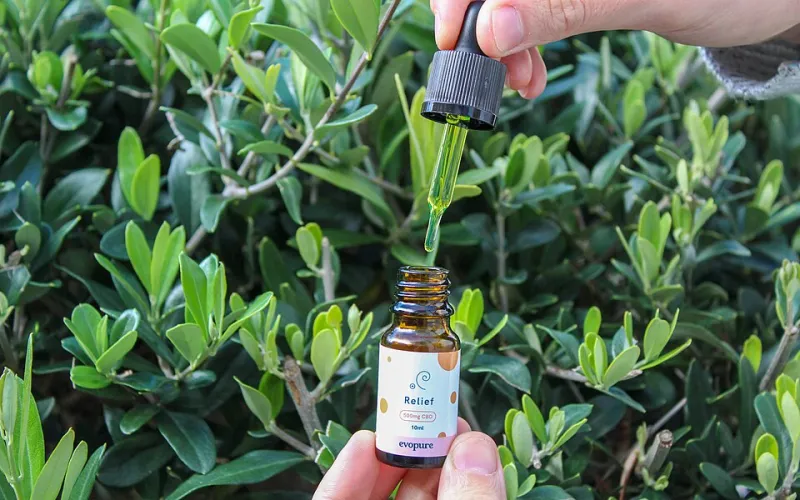
Photo: Evopure, CC BY-SA 2.0, via Wikimedia Commons
The dropper is a useful little tool. It is not a measuring spoon, a standard unit, or a personality test. And yet, somewhere between the third ‘how much should I take?’ search and the fourth conflicting answer, it starts to feel like one.
CBD dosing is personal. That is not a cop-out; it is the honest starting point. Body size, what you are using it for, how you take it, and what else is going on in your life all matter. There is no single number that suits every grown-up, and anyone who tells you otherwise is probably selling something.
This is general education, not medical advice. If you take medication, are pregnant or breastfeeding, or have a health condition, talk to a healthcare professional before adding CBD to your routine.
A drop is not a unit
Here is the first thing worth knowing: a drop is not a standard measurement. The size of a drop depends on the pipette, the thickness of the liquid, the angle you hold it at, and how hard you squeeze. Two bottles can both say ‘one dropper’ and deliver different amounts.
Many oils are around 0.05ml per drop, which means roughly 20 drops to a millilitre. But that is a rough guide, not a law. If you want to compare products properly, work in millilitres wherever you can. If the bottle has ml markings on the dropper, use them. If it does not, treat ‘drops’ as a house language for that bottle only.
Read the bottle like a grown-up
The label usually gives you two useful numbers: the total CBD in milligrams and the bottle size in millilitres. From there, you can work out milligrams per millilitre.
A 10ml bottle with 1,000mg contains 100mg per ml. A 10ml bottle with 500mg contains 50mg per ml. That is the maths. It does not tell you what amount to take, but it does stop you comparing two products as if they were the same.
If you decide to use 0.25ml of a 100mg per ml oil, that is 25mg. If you use 0.5ml, that is 50mg. You do not need a laboratory, but you do need to know what you are pouring.
The ‘one dropper fits all’ trap
CBD shelves are full of implied instructions. One dropper. Twice a day. Easy. But a dropper is a delivery tool, not a prescription. The amount that suits your neighbour, your favourite podcaster, or a stranger in a review section is not a benchmark for you.
A calmer approach is to start with a small amount, keep everything else steady, and see how you get on. ‘Start low and go slow’ is common guidance for a reason. It is not a rule that guarantees anything, but it is a sensible way to avoid making lots of changes at once and then having no idea what did what.
Keep a record that is not a science project
You do not need a spreadsheet, a lab notebook, or a colour-coded chart. A notes app entry is fine. Write down the date, the product, the amount in ml or drops, the time, and a line about how you felt. Keep it short enough that you will actually do it.
A five-line log is more useful than a perfect system you abandon on day two. After a week or two, you will have something far more valuable than a generic dosage chart: a record of your own experience with one product, one method, and one amount.
Change one thing at a time
If you switch from taking oil under the tongue to swallowing it, or change from one strength to another, change only that one thing for a few days. Otherwise you are guessing. Consistency is not about being rigid; it is about giving yourself a chance to notice what is actually happening.
The kitchen-lab problem
There is a temptation, once you start thinking about milligrams, to turn the kitchen into a chemistry set. Try not to. Avoid eyeballing ‘glugs’, mixing several products without measuring, or building homemade concoctions. Keep it boring. Use the dropper, use the ml markings if you have them, and write it down.
Also, store your product as the label suggests. Heat and light are not kind to oils, and a bottle that has been living on a sunny windowsill is not doing you any favours.
When to press pause
If you feel unwell, odd, or not yourself after taking CBD, stop and seek advice. Do not chase a bigger number because someone online says it changed their life. CBD is not a competition, and more is not automatically better. If you are taking medication, check with a pharmacist or doctor before making changes.
Your amount is yours
The dropper is not a measuring spoon, and your routine does not need to look like anyone else’s. Read the label, do the simple maths, start small, keep a few notes, and give yourself time. That is a far more grown-up guide to CBD dosing than any ‘one dropper fits all’ label.
If you are new to CBD, begin with one product and a modest amount. If you have been using it for a while, a short record can still teach you something. And if the whole thing starts to feel like an exam, put the dropper down, make a cup of tea, and come back to it when you are curious rather than rushed.