Fourteen Days Off the Dropper: Keeping a CBD Break That Actually Tells You Something
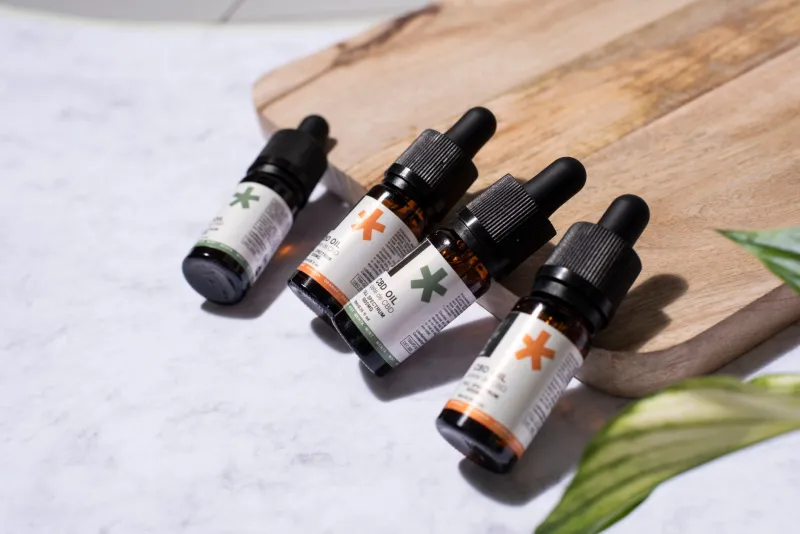
There's a particular kind of optimism that lives in a half-full bottle of CBD oil. It sits at the back of the cupboard, quietly implying that things are being handled. Which is precisely why putting it down for a fortnight is such a useful exercise — not as a detox, not as a test of willpower, but as a way of finding out what you've actually been getting from it.
This isn't a detox piece. CBD isn't a drug you need to wean off in any meaningful sense for most people, and there's no established withdrawal syndrome attached to it. What a break gives you is something more mundane and more useful: a comparison. Two weeks of data, gathered by you, about you.
Why stop at all when it seems to be working?
Fair question. If something is helping, why fiddle with it?
The honest answer is that most of us are terrible at knowing what's helping. We start taking a dropper of an evening in November, the nights draw in, the routine settles, and by February we've attributed a whole cluster of small improvements to one bottle. Maybe that's right. Maybe the improvement was the routine itself — the ten minutes of sitting down, the cup of tea, the absence of a screen.
A deliberate pause separates those two things, or at least gives you a fighting chance of telling them apart. It's the same logic as a home energy meter: you don't need it to be perfect, you just need it to show you the difference when something changes.
Start with a baseline, not a resolution
Before you stop, spend three or four nights writing down what a normal evening looks like. Not in prose — in columns. What time you took your CBD, how much, what you were doing either side of it, how long you took to fall asleep, how many times you woke, how you'd rate the day's stress out of ten, and one line on mood.
That last one is the tricky one, because "mood out of ten" is a fiction we tell ourselves. Try something more concrete instead: what did you do today that you'd rather not have done? What did you skip? Those are observable. "Feeling 7/10" is not.
Give it a number for the dose and the timing, because those are the only hard variables you control. Two drops at nine o'clock is a fact. "A bit of oil before bed" is a memory, and memories drift.
The diary itself: four lines, every night
Keep it short or you won't keep it at all. Four lines is enough:
- Sleep — rough time to fall asleep, number of wakings, and whether you woke before the alarm.
- The day — stress as a single word (flat, steady, frayed, grim), plus one physical note (headache, shoulders, jaw).
- The ritual — did you still sit down at the same time, even without the dropper? This is the line most people find most revealing.
- Anything else — a one-liner on whatever was actually going on. A deadline, a boiler, a family thing.
The fourth line matters more than it looks. A fortnight isn't a controlled trial; it's a fortnight. If week two happens to contain a work crisis, your numbers are going to say more about the work crisis than about CBD. Writing it down stops you misreading your own data later.
What people tend to notice — and what it probably means
Over two weeks, most people report one of three patterns.
Nothing much changes. This is the most common result and the least disappointing, even though it sounds it. If your sleep, stress and routine hold steady without the oil, you've learned that you have a decent foundation — and that your CBD was, at most, a small supporting act. That's genuinely good news. It's also permission to spend the money elsewhere, or to keep a bottle for the weeks that actually warrant it.
Sleep gets patchier, evenings feel longer. This is where people jump to conclusions. It could be the missing CBD. It could equally be the missing ten minutes of sitting still. The ritual line in your diary is the tiebreaker here — if you stopped the ritual as well as the oil, you've changed two things at once and can't attribute the result to either.
You notice you'd stopped thinking about it. Some people find the break is a relief, because the bottle had quietly become another thing to remember. That's worth knowing too. A wellness habit that generates admin isn't much of a wellness habit.
The placebo bit, stated plainly
CBD sits in an awkward place in the UK: sold as a food supplement rather than a licensed medicine, which means the claims made about it are limited by law and the evidence base is thinner than the shelf talk suggests. That's not a scandal, it's just the situation. And in that situation, expectation does a lot of heavy lifting.
Which cuts both ways. If you expect the break to be awful, you'll probably find it awful. If you expect nothing, you may find nothing. Your diary can't eliminate that bias, but it can record what you expected before you started — write it down on day one, in one sentence, and don't look at it until day fourteen. It's a small trick and it's oddly effective.
Three things a fortnight cannot tell you
Be clear-eyed about the limits.
- It can't tell you whether CBD works. That's a question for clinical research, not your kitchen table.
- It can't diagnose anything. If your sleep is genuinely poor for weeks on end, or your stress is tipping into something heavier, that's a conversation with your GP — not a dosing experiment.
- It can't separate CBD from everything else in your life. Nothing you do at home can. That's fine. You're not trying to publish; you're trying to make a decision.
One practical note: if you take any regular medication, particularly anything with a narrow therapeutic window, check with a pharmacist before starting or stopping CBD. It interacts with how some medicines are processed, and that's a real consideration rather than a disclaimer.
Day fourteen: what to do with the answer
Read the fortnight back in one sitting and ask three questions.
Did anything change that I'd notice if nobody had told me to look? Did the ritual survive without the bottle — and do I want to keep the ritual on its own? And finally: if I restart, what specifically am I restarting for?
That last one is the whole point. "Because I always have" is a reason to keep buying something. "Because the last hour before bed was calmer when I did" is a reason with a shape to it — something you can check against a fortnight of your own handwriting.
Either answer is a good one. The only bad outcome is another bottle at the back of the cupboard, quietly implying that things are being handled.